

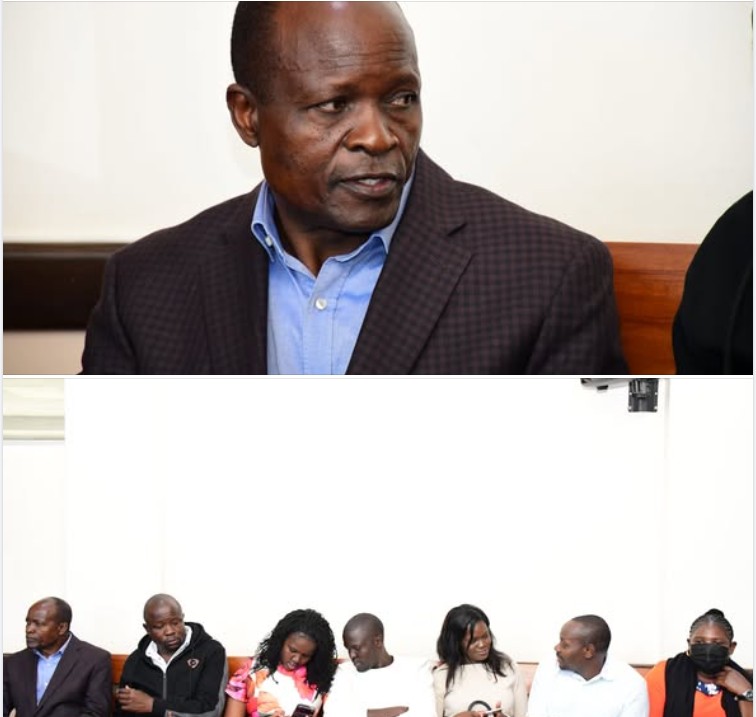
The decision by the Office of the Director of Public Prosecutions to support and negotiate a plea bargain agreement in the KSh 235 million graft case involving former Migori Governor Okoth Obado has once again reopened one of the most painful conversations in Kenya’s justice system: whether the law truly treats all citizens equally.
For many ordinary Kenyans, this case is not simply about legality or constitutional procedure. It is about perception. It is about fairness. It is about whether powerful politicians and public officials are subjected to the same harsh criminal justice system that poor citizens face every single day.
The courts may have ruled within the law. The plea bargain may be legally recognized under Kenya’s criminal justice framework. The ODPP may defend the agreement as a successful recovery of public assets. But outside courtrooms and legal textbooks, wananchi are asking difficult questions that cannot simply be dismissed.
Because the reality many citizens see is deeply disturbing.
A young man who steals KSh 5,000 in Nairobi can spend months in remand prison waiting for hearings. A boda boda rider accused of stealing a mobile phone can be denied bail and dragged through a humiliating legal process. Poor Kenyans accused of petty crimes rarely receive sympathy, negotiation opportunities or carefully crafted settlements.
But when politicians or senior public officials are accused of economic crimes involving tens or hundreds of millions, the language suddenly changes.
The prosecution begins talking about “alternative dispute resolution.” The courts begin hearing about “asset recovery.” The accused persons become “negotiating parties.” The focus shifts away from punishment and moves toward settlement agreements.
And in the end, many walk away without ever serving prison sentences.
That contradiction is what continues angering the public.
The ODPP says the Obado deal secured assets worth more than three times the amount allegedly stolen. On paper, that may sound like a victory. But the public is not only looking at numbers. Citizens are looking at accountability.
They are asking whether corruption in Kenya has now become a negotiable financial transaction instead of a serious criminal offense.
Because corruption is not a technical crime.
Corruption destroys lives.
When public money disappears, hospitals lack medicine. Roads remain incomplete. Schools collapse. Water projects stall. Youth remain unemployed. Entire counties remain trapped in poverty while a few politically connected individuals accumulate wealth through abuse of public office.
The suffering caused by corruption is real and visible across the country.
That is why many Kenyans struggle to understand why a poor person stealing food can end up in jail while people accused of looting millions from taxpayers negotiate settlements and move on with life.
The bigger danger now lies in the precedent the ODPP is setting.
If every major corruption case eventually ends in negotiations, settlements and asset surrender agreements, what message does that send to future public officials?
It sends a dangerous signal that corruption is no longer a high-risk crime.
Future governors, cabinet secretaries and county officials may quietly conclude that even if they are eventually caught years later, the worst possible outcome could simply involve surrendering part of their wealth while avoiding prison altogether.
That weakens deterrence completely.
A serious anti-corruption fight cannot survive if suspects believe economic crimes can eventually be negotiated away.
This is why many Kenyans are now questioning the direction the ODPP is taking.
Is the office still focused on prosecuting corruption aggressively? Or is it slowly transforming itself into a negotiation desk for politically connected suspects?
Because the public has started noticing a pattern.
A massive corruption scandal erupts.
There is public outrage.
Investigations dominate headlines for years.
The accused appear in court.
Then eventually, somewhere along the way, a settlement emerges.
Assets are surrendered.
Charges are withdrawn.
And the country moves on.
Meanwhile, prisons remain overcrowded with poor people who never had the privilege of negotiating their way out of criminal cases.
That perception of unequal justice is becoming more dangerous with every passing year.
The justice system survives on public confidence. Once citizens begin believing that courts and prosecutors are harsher on the poor but flexible toward the wealthy and politically connected, trust in institutions starts collapsing.
And Kenya is already dangerously close to that point.
The ODPP argues that plea bargains help recover public assets faster and reduce lengthy court battles. That argument may have legal and practical merit. But the office must also understand that corruption cases carry enormous symbolic importance in society.
These are not ordinary cases.
They involve public trust.
They involve taxpayer money.
They involve the credibility of the entire government.
When citizens watch politically powerful individuals accused of economic crimes avoid prison through negotiations while petty offenders continue filling remand prisons, they stop believing justice is equal.
That is the real crisis quietly growing in Kenya.
The anti-corruption war then begins looking selective and cosmetic instead of genuine and principled.
Even more worrying is the impact these deals could have on investigative agencies like the Ethics and Anti-Corruption Commission and the Directorate of Criminal Investigations. Officers spend years tracing money trails, gathering evidence and building complex corruption cases. But if those cases increasingly end with negotiated settlements instead of criminal convictions, public confidence in anti-corruption enforcement weakens dramatically.
People begin seeing corruption prosecutions not as criminal accountability but as delayed financial negotiations between the state and the politically connected.
That is a dangerous place for any country to reach.
The ODPP therefore faces serious moral and institutional questions.
What kind of justice system is Kenya building?
One where poor offenders are punished harshly while powerful suspects negotiate freedom?
One where economic crimes involving millions are treated more softly than petty theft?
One where prison becomes a punishment mainly reserved for the struggling and powerless?
Because right now, many ordinary Kenyans genuinely believe that courts and jails were designed for the poor while negotiations and settlements were designed for the elite.
Whether fair or unfair, that perception is becoming deeply rooted in public thinking.
And unless the justice system begins demonstrating equal seriousness against both grand corruption and petty crime, public anger and mistrust toward institutions will continue growing.
Kenya cannot build a credible anti-corruption culture where stealing billions becomes negotiable while stealing bread becomes unforgivable.
That contradiction is unsustainable.
And the longer institutions ignore it, the deeper the country sinks into a dangerous culture where accountability depends not on the crime committed, but on who committed it.





Leave a Reply