

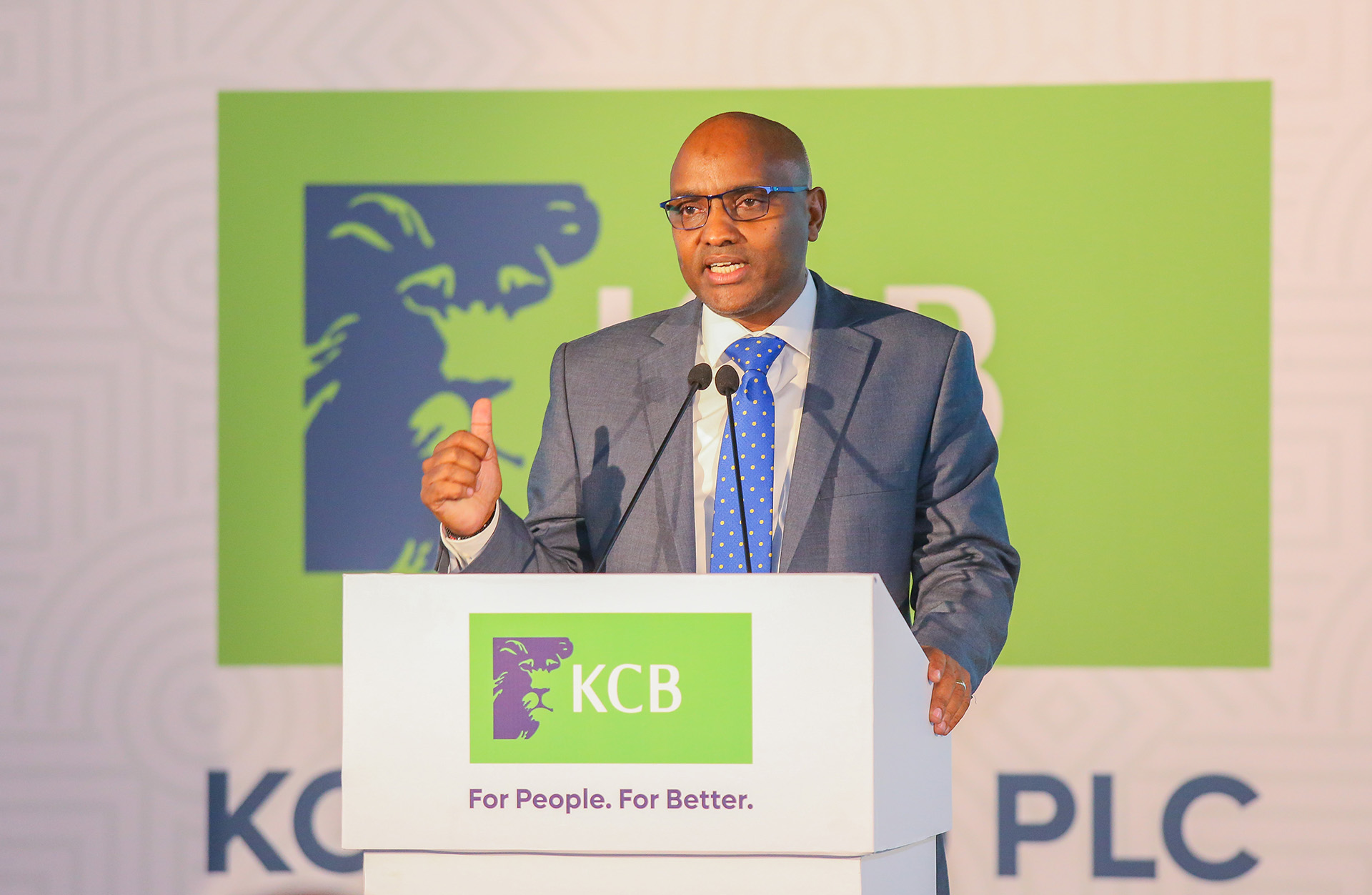
A fresh debate is now unfolding around Paul Russo, the chief executive of KCB Bank Kenya, after new disclosures revealed both a sharp rise in his earnings and a significant jump in his personal stake in the bank. The numbers are drawing attention not just because of their size, but because of their timing and the broader questions they raise about transparency at the top of Kenya’s banking sector.
Russo earned a total compensation package of Sh285.3 million, making him one of the highest paid CEOs in the country. This represents a 14 percent increase from the previous year, with his basic monthly salary alone standing at around Sh7.2 million. At the same time, he increased his shareholding in KCB by 51.9 percent, moving from 200,000 shares in 2024 to 303,800 shares in 2025. The combination of rising pay and growing ownership has now put him under a spotlight.
The development comes at a time when KCB itself is performing strongly. The bank posted record profits, expanded its asset base by 9 percent, and saw its share price jump by 58 percent. On the surface, this paints a picture of a well-performing institution led by a CEO who is benefiting from that success. However, it is precisely this alignment that is now prompting deeper scrutiny.
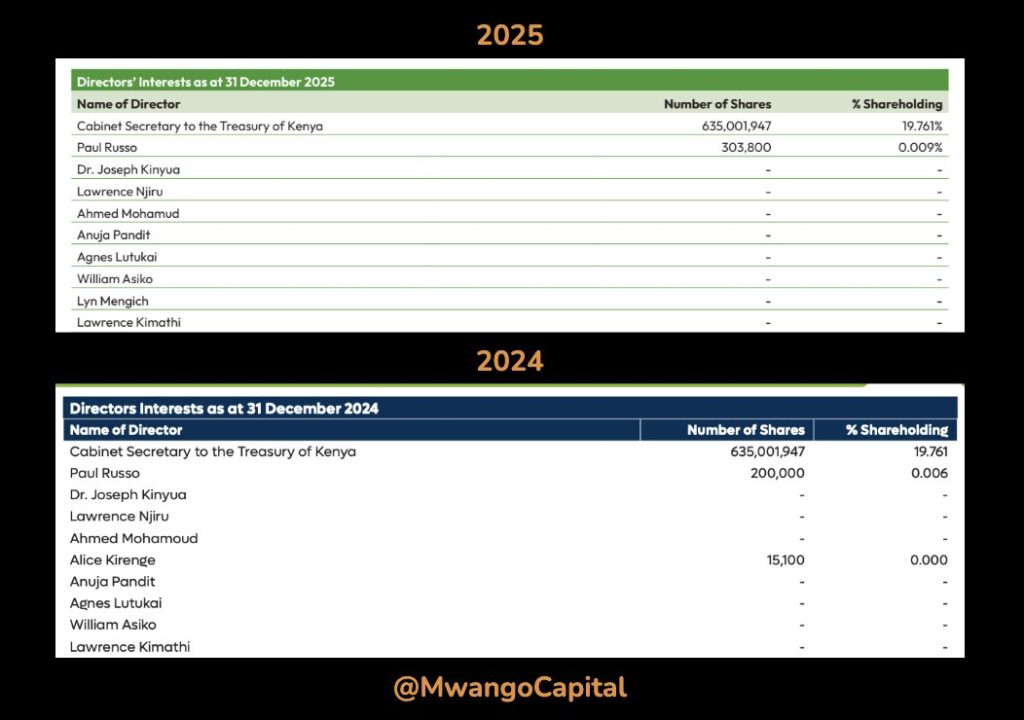
Analysts and observers are beginning to ask how the CEO was able to significantly increase his shareholding within such a short period. Was the acquisition funded purely through salary and bonuses, or were there structured stock options and incentive schemes involved. Were the shares purchased on the open market, and if so, under what conditions. These questions are not accusations, but they are critical in understanding the full picture.
In financial markets, perception carries weight. When a sitting CEO increases his stake in a company he leads, it inevitably raises questions about timing, access to information, and regulatory compliance. This is why strict rules exist around insider trading and disclosure. The issue is not necessarily that shares were acquired, but whether the process was fully transparent and within the boundaries of established governance frameworks.
Across the sector, executive pay is rising, but Russo’s case stands out because of the dual narrative of high earnings and increased ownership. At Equity Bank Kenya, CEO James Mwangi earned Sh275.7 million after a 66 percent jump in compensation, supported by a 52 percent rise in profit before tax to Sh92.1 billion. At Standard Chartered Kenya, CEO Kariuki Ngari saw his pay fall to Sh141.2 million following a 40 percent drop in profits. Meanwhile, Absa Bank Kenya CEO Abdi Mohamed earned Sh120.1 million as the bank posted steady growth.
Yet, it is Russo who is now at the center of the conversation. The reason is simple. His case brings together compensation, ownership, and market performance in a way that invites closer examination. Supporters argue that a CEO increasing his stake is a positive sign, showing confidence in the institution’s future and aligning his interests with those of shareholders. That argument carries weight, especially in a market where investor confidence is key.
But critics are not convinced that the conversation should end there. They argue that transparency is the real issue. In a system where executives have access to information not available to the public, even the appearance of advantage can undermine trust. This is why disclosure requirements exist and why such moves are often scrutinized closely.
The timing of the share increase is particularly important. It coincides with a period of strong performance and rising share prices, which could make the acquisition financially beneficial. While that may be entirely legitimate, it also raises the need for clear communication on how the shares were acquired and whether all regulatory guidelines were followed.
The conversation is also being shaped by a broader concern about executive pay in Kenya. As banks report strong profits and top executives receive increasingly large compensation packages, questions are being asked about fairness and accountability. For many, the issue is not just about how much is earned, but how those earnings relate to the wider economic environment and the experiences of ordinary customers.
Regulators such as the Central Bank of Kenya are expected to maintain oversight, particularly in matters that involve executive conduct and market activity. The role of such institutions is to ensure that confidence in the financial system is maintained and that all players operate within the law.
For KCB, the situation presents both a challenge and an opportunity. The bank’s strong performance is a positive story, but the questions surrounding its CEO highlight the importance of transparency at the highest level. In an era where public scrutiny is increasing, how institutions respond to such questions can shape their reputation.
As the debate continues, one thing is becoming clear. This is not just a story about salary or shares. It is about the intersection of power, money, and accountability in Kenya’s financial sector. It is about whether systems designed to ensure fairness are working as intended.
The answers may well determine how this story is remembered.




Comments
Leave a comment
Your email stays private. Comments appear after moderation.