

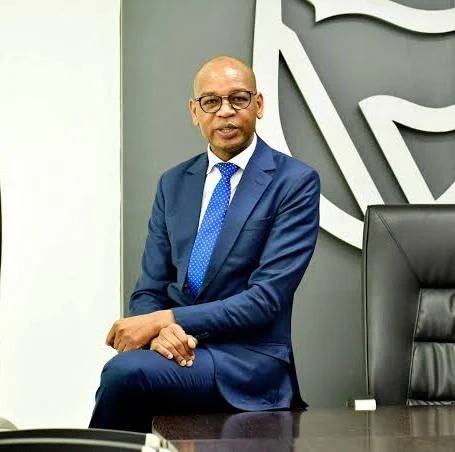
The long-running battle between whistleblower David Dimba and Stanbic Bank Kenya has entered a new and increasingly confrontational phase, with the former employee launching a blistering attack against the bank’s top leadership and accusing management of prioritizing public relations over employee welfare.
In a fiery public address that has generated intense discussion within banking circles, Dimba alleged that serious concerns raised by employees continue to go unresolved while the institution focuses on protecting its public image. His remarks, directed largely at Stanbic Bank Chief Executive Joshua Oigara and members of the bank’s senior management team, have once again thrust the lender into an uncomfortable spotlight.
The latest outburst is significant not merely because of the language used but because it reflects a growing public dispute that has refused to fade away despite repeated attempts to move beyond it.
Ordinarily, disagreements between former employees and large corporations eventually disappear from public view. The parties move on. New issues emerge. The public loses interest.
The Stanbic-Dimba saga has followed a different path.
Instead of fading, it appears to be intensifying.
Years after leaving the institution, Dimba continues to publicly challenge the bank’s leadership, insisting that unresolved issues remain hidden beneath the surface of Stanbic’s carefully managed corporate image.
At the center of his latest criticism is the claim that employees within the bank are increasingly frustrated with management but feel unable to openly express their concerns.
Dimba repeatedly alleged that many workers remain silent not because they are satisfied but because they fear retaliation or professional consequences.
According to him, numerous employees disagree with decisions made by management but continue to comply because their livelihoods depend on it.
While those allegations have not been independently verified, they form the foundation of a narrative that Dimba has consistently advanced in recent months: that beneath Stanbic’s polished public image lies a workforce grappling with growing dissatisfaction.
His criticism goes beyond individual personalities.
It strikes at the heart of leadership culture.
Dimba argues that organizations succeed when leaders listen to concerns, engage with criticism and address genuine grievances. He claims that instead of confronting difficult questions directly, Stanbic’s leadership has become more focused on controlling narratives and managing perceptions.
The allegations are particularly notable because they come at a time when Joshua Oigara remains one of the most recognizable figures in Kenya’s banking sector.
Oigara built his reputation during a successful tenure at KCB before taking over leadership at Stanbic. Throughout his career, he has been widely viewed as a respected corporate executive capable of steering complex institutions through challenging economic environments.
Yet critics increasingly argue that leadership should not be measured solely by financial performance.
They contend that workplace culture, employee morale and internal governance are equally important indicators of success.
That is where the current debate becomes especially uncomfortable for Stanbic.
Dimba alleges that instead of investing resources in resolving employee concerns, management has directed attention toward reputation management efforts, security measures and crisis communication strategies. He questioned whether resources could be better spent improving staff welfare, employment conditions and workplace benefits.
Among the issues he referenced were concerns relating to contract staff, employee compensation, bonuses and medical cover arrangements.
His argument is straightforward.
If employees are unhappy, he says, leadership should focus on addressing the causes of that dissatisfaction rather than attempting to shape public perception.
The allegations also raise broader questions about corporate governance.
Throughout his remarks, Dimba suggested that concerns had been escalated internally and that governance issues had been brought before decision-makers within the institution.
He maintained that these concerns deserve substantive engagement rather than dismissal.
Whether those claims are accurate remains a matter of dispute.
However, governance experts note that institutions often face greater reputational risks when allegations remain unanswered for extended periods.
The longer controversies linger, the more difficult it becomes for organizations to convince stakeholders that everything is functioning normally.
For Stanbic, the challenge is not simply legal or operational.
It is reputational.
Banking is built on trust.
Customers trust banks with their money.
Investors trust executives with capital.
Employees trust management with their careers.
When questions emerge about internal culture, governance or staff treatment, the impact can extend far beyond the workplace.
That is why the Dimba controversy continues to attract attention.
Many observers are less interested in the personal conflict itself and more interested in what it may reveal about how large institutions respond when challenged by former insiders.
Historically, whistleblowers have occupied a complicated position within organizations.
Some are celebrated as truth-tellers.
Others are dismissed as disgruntled former employees.
In many cases, public opinion remains divided.
The Stanbic dispute is no exception.
Supporters of the bank argue that allegations should be supported by evidence and caution against accepting every claim at face value.
Supporters of Dimba, meanwhile, argue that powerful institutions often possess enormous resources to defend themselves while critics must rely largely on persistence and public attention.
This imbalance has become a recurring theme in modern corporate disputes.
Large organizations have legal teams, communications departments and significant financial resources.
Individuals rarely enjoy comparable advantages.
As a result, public sympathy often gravitates toward those perceived as challenging powerful institutions.
The emergence of social media has amplified this dynamic.
Former employees no longer need traditional media platforms to raise concerns.
They can communicate directly with the public, build audiences and sustain attention on issues that might otherwise disappear.
Dimba has leveraged this reality effectively.
Each public statement ensures that the controversy remains alive.
Each allegation reignites debate.
Each new claim places fresh pressure on Stanbic’s leadership.
For Joshua Oigara, the challenge is increasingly complex.
Even if management disputes the allegations, the persistence of the controversy means the bank continues to face uncomfortable questions.
Why does the issue keep resurfacing?
Why does it continue attracting attention?
Why has it proven so difficult to put to rest?
These questions are unlikely to disappear anytime soon.
The longer the conflict continues, the greater the risk that it evolves from a dispute involving one former employee into a broader referendum on leadership, governance and corporate culture.
That possibility should concern any institution.
Corporate reputations are not built solely through annual reports and profit announcements.
They are built through trust.
They are sustained through transparency.
And they are tested most severely when criticism emerges from within.
For now, David Dimba shows no sign of backing down.
His latest remarks suggest a man determined to continue challenging Stanbic’s leadership regardless of the obstacles he faces.
Whether his claims ultimately reshape public perceptions of the bank remains to be seen.
What is already clear, however, is that the battle between David Dimba and Stanbic Bank has become one of the most persistent corporate disputes in recent Kenyan memory.
And with every new chapter, the spotlight grows brighter on Joshua Oigara and the institution he leads.









Leave a Reply