

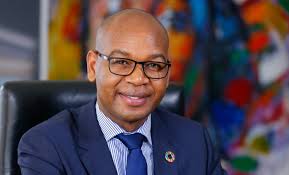
For nearly a decade, Joshua Oigara stood at the pinnacle of Kenya’s banking sector.
As Chief Executive Officer of KCB Group, he presided over one of the most aggressive expansion drives ever undertaken by a Kenyan bank. KCB grew beyond Kenya’s borders, acquired new subsidiaries, expanded into new markets and cemented its position as one of East Africa’s most powerful financial institutions.
To shareholders, he was often presented as a success story.
To critics, however, another narrative was emerging.
Behind the impressive profit figures, regional expansion and corporate awards, questions continued to swirl around some of the controversies that followed KCB during Oigara’s tenure.
The biggest of these questions involved South Sudan.
At a time when South Sudan was struggling with conflict, economic collapse and allegations of widespread corruption, international watchdogs and investigative organizations raised concerns about how politically connected individuals were moving money through financial institutions operating in the region.
KCB’s presence in South Sudan inevitably placed the bank in the spotlight.
Reports alleging weaknesses in the financial system and questions surrounding politically exposed persons triggered uncomfortable conversations about whether regional banks were doing enough to identify suspicious transactions and prevent abuse of the financial system.
Although KCB consistently denied wrongdoing and defended its compliance procedures, the controversy refused to disappear.
The issue was not necessarily what had been proven in court.
The issue was perception.
Banking is built on trust.
The moment questions emerge about governance, oversight and financial integrity, confidence begins to erode.
For years, Oigara found himself responding to concerns about anti-money laundering controls, politically exposed clients and the responsibilities of banks operating in high-risk jurisdictions.
The pressure intensified because KCB was no ordinary bank.
It was a systemically important financial institution handling billions of shillings and serving millions of customers across East Africa.
As scrutiny mounted, observers began asking whether the bank’s rapid expansion had outpaced its ability to manage growing compliance risks.
Then came other controversies.
Questions emerged about executive remuneration.
Concerns surfaced regarding governance structures.
Anonymous claims circulated regarding management practices and compensation.
Although some allegations were later dismissed or unsupported, they nevertheless contributed to an atmosphere in which public scrutiny of KCB’s leadership continued to grow.
By the time Oigara’s departure from KCB was announced, many observers were asking whether the exit was simply a routine leadership transition or whether it reflected deeper issues within the institution.
Officially, KCB described the transition as part of normal succession planning.
Yet public curiosity persisted.
Why was one of Kenya’s most visible banking executives leaving after years of overseeing record profits?
Why did speculation continue long after the announcement?
Why were so many unanswered questions still being discussed in boardrooms, financial circles and media commentary?
These questions were amplified by the fact that Oigara’s tenure coincided with one of the most turbulent periods in East African banking history.
Banks were increasingly facing scrutiny from regulators, anti-money laundering agencies, civil society groups and international watchdogs.
The days when financial institutions operated largely outside public scrutiny were coming to an end.
Every transaction, every politically exposed customer and every compliance failure was becoming subject to closer examination.
For Oigara, this meant that his legacy would always be viewed through two competing lenses.
The first lens highlights growth, profitability and regional expansion.
The second lens focuses on governance, compliance and the controversies that repeatedly placed KCB under public scrutiny.
The reality is that both narratives now form part of his legacy.
Supporters point to KCB’s impressive financial performance during his leadership.
Critics point to the questions that continued to surface regarding risk management, oversight and accountability.
Years later, the debate remains unresolved.
What is clear is that Joshua Oigara’s time at KCB was not merely a story of profits and expansion.
It was also a story about the increasing pressure facing modern banking executives in an era where public trust, regulatory compliance and corporate governance are scrutinized more intensely than ever before.
And for many observers, the questions that surrounded his final years at KCB remain as intriguing as the achievements that defined them.




Comments
Leave a comment
Your email stays private. Comments appear after moderation.