

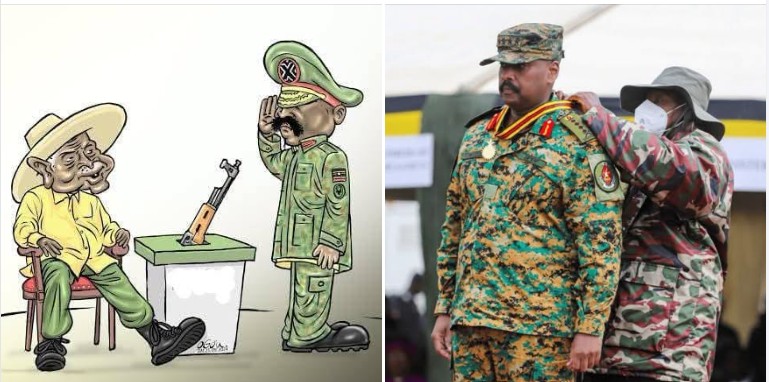
Ugandan President Yoweri Museveni has come under a blistering attack from his political opponents over his public condemnation of torture and human rights abuses, with critics accusing the veteran leader of attempting to distance himself from violations they allege have been committed by security agencies during his four decades in power.
In a strongly worded statement, an opposition figure accused Museveni of hypocrisy, arguing that the Ugandan leader cannot credibly condemn torture, illegal detention and mistreatment of citizens while his administration continues to face allegations involving enforced disappearances, politically motivated arrests and abuse of opposition supporters.
The statement paints a devastating picture of the gulf between Museveni’s public pronouncements and the experiences opposition politicians say they and their supporters have endured at the hands of state security agencies.
At the centre of the attack is a simple but politically explosive question: Can Museveni genuinely present himself as an opponent of torture when his government has repeatedly been accused of overseeing the very practices he now condemns?
The opposition argues that the answer lies not in presidential speeches but in the experiences of Ugandans who say they have been arrested, detained, abducted or abused because of their political activities.
Arua 2018 Returns to Haunt Museveni
One of the most significant incidents raised in the statement is the violence surrounding the 2018 Arua parliamentary by-election, an episode that became one of the defining moments in the confrontation between Museveni’s government and a new generation of opposition politicians.
The statement recalls the killing of Yasin Kawuma, who was working as a driver for opposition politician Robert Kyagulanyi, popularly known as Bobi Wine.
Kawuma was shot dead during the chaos surrounding the Arua by-election in August 2018.
Bobi Wine was subsequently arrested alongside several other opposition politicians and supporters. He later alleged that he was severely assaulted while in custody.
The events generated national and international outrage and transformed Arua into a symbol of Uganda’s increasingly bitter political contest.
In the latest statement, Museveni is reminded of remarks attributed to him following the incident, which the author interprets as the President having effectively celebrated the beating of an opposition politician.
The reference is intended to expose what the author regards as a contradiction between Museveni’s present condemnation of torture and his previous rhetoric regarding the treatment of political opponents.
For Uganda’s opposition, Arua has never been merely an isolated episode. It represents what critics say has become a broader pattern in which political competition is increasingly accompanied by arrests, intimidation and the deployment of security forces.
Andrew Mwenda and the Muhoozi Question
The statement also drags veteran journalist and political commentator Andrew Mwenda into the controversy.
Museveni is accused of criticising Mwenda while simultaneously overlooking his close public association with the President’s son, Gen Muhoozi Kainerugaba, one of Uganda’s most powerful military figures.
The author argues that Museveni cannot selectively condemn individuals around his political establishment while ignoring controversial public statements attributed to his own son.
Muhoozi’s increasingly prominent political and military role has generated intense debate about Uganda’s political future.
For years, opposition politicians and government critics have raised concerns about what became popularly known as the “Muhoozi Project”—the allegation that political and military structures were gradually being positioned to facilitate an eventual transfer of power from Museveni to his son.
Museveni’s supporters have rejected portrayals of Uganda as a monarchy or family enterprise. His critics, however, point to Muhoozi’s rise through the military and his political prominence as evidence that questions about succession can no longer be dismissed.
The statement goes even further, accusing the Museveni government of replacing constitutional government with the “personalisation of power” and alleging that Uganda is increasingly being run like a family enterprise rather than a republic governed through strong independent institutions.
These are serious political allegations, and they reflect one of the fundamental battles shaping Uganda’s contemporary politics: whether the country is experiencing ordinary political continuity under a long-serving president or an increasingly personalised system centred around Museveni and his family.
Sam Mugumya Case Raises Fresh Questions
Another name placed at the centre of the statement is Sam Mugumya, whose alleged disappearance and subsequent condition have become part of the opposition’s case against Uganda’s security establishment.
According to the statement, Mugumya was abducted in Mbarara in August last year before a disturbing video later emerged purportedly showing him in severely deteriorated physical condition inside Kasenyi Military Barracks.
The allegations surrounding Mugumya require independent investigation and verification, particularly regarding where he was held, by whom and what happened during his detention.
But the opposition’s argument is that such cases cannot simply disappear from public discussion whenever government officials make fresh promises to respect human rights.
If individuals are detained by state agencies, critics argue, the authorities have an obligation to account for their whereabouts, ensure access to legal representation and explain the circumstances under which they are being held.
The statement accuses Museveni’s administration of responding to disturbing allegations with silence or denial instead of transparent investigations and accountability.
Where Is Aking Zale?
The statement additionally raises concerns about musician Aking Zale, alleging that he was picked up from Kamwokya and that his whereabouts remain unknown.
It further claims that people reportedly released from Kasenyi barracks have alleged seeing him there and have made allegations about his treatment.
Those claims are serious and should be treated as allegations unless independently established.
However, the broader issue raised by the statement is difficult for any government to dismiss: when citizens are alleged to have been taken into custody, families should not be left uncertain about where they are being held.
A functioning justice system requires arrests to be documented, detainees to be produced before legally recognised institutions and allegations of mistreatment to be investigated.
Secret detention, if established, undermines those safeguards.
Uganda’s Notorious ‘Drone’ Abductions
Perhaps nothing has come to symbolise allegations of political repression in Uganda in recent years more than the word “drone.”
The term does not refer to unmanned aircraft in this context. It became associated with vehicles allegedly used by security personnel during arrests and abductions, particularly around politically turbulent periods.
Opposition supporters have repeatedly alleged that individuals were seized by armed personnel, transported to undisclosed locations and held outside normal detention procedures.
The statement specifically recalls the alleged “drone” abductions, torture in so-called safe houses and prolonged detention of opposition supporters.
It claims that some victims eventually returned home with accounts of abuse while others never returned.
The allegations have become part of the political memory of Uganda’s recent elections, particularly the violent period surrounding the 2021 general election.
They have also fuelled demands for the government to provide comprehensive information about people reported missing following security operations.
Eddie Mutwe and Opposition Supporters
The statement further invokes the ordeal of Eddie Mutwe, a prominent figure within Bobi Wine’s security team and political circle, as another example of what opposition activists describe as systematic targeting.
It also refers to Muwanga Kivumbi and numerous National Unity Platform supporters whose treatment has generated controversy.
The National Unity Platform emerged as the most significant electoral challenge to Museveni’s National Resistance Movement during the 2021 election, particularly among younger and urban voters.
The rise of NUP dramatically changed Uganda’s opposition landscape.
Bobi Wine’s transformation from musician to presidential challenger gave a generation of younger Ugandans a political vehicle through which to express frustration with unemployment, corruption, inequality and Museveni’s extraordinarily long stay in power.
That political transformation was accompanied by an increasingly hostile confrontation between NUP and the security establishment.
The government has maintained that security agencies act against people suspected of violating the law rather than targeting citizens simply because of their political affiliations.
The opposition disputes that explanation and argues that arrests have disproportionately affected government critics and NUP supporters.
Four Decades in Power
Museveni’s longevity inevitably hangs over the entire debate.
He came to power in 1986 after leading a guerrilla struggle against the government of Milton Obote and, subsequently, the military government of Tito Okello.
His National Resistance Movement presented itself as something fundamentally different from the governments that had preceded it.
Museveni’s revolutionary message was built partly around opposition to political violence, sectarianism, dictatorship, corruption and abuse of state institutions.
That history is precisely why the latest criticism is potentially damaging.
The opposition is essentially confronting Museveni with his younger self.
The statement argues that many of the abuses Museveni once cited to justify armed resistance against previous governments are the same abuses his own administration is now accused of committing.
Arbitrary arrests.
Torture allegations.
Election-related violence.
Political intimidation.
Concentration of power.
Suppression of opponents.
If those accusations are established, the contradiction would be profound.
The man who entered Kampala promising a fundamental change would have presided over the institutionalisation of practices he once claimed to oppose.
From Liberation Movement to Entrenched Government
Museveni’s supporters would strongly reject that characterisation.
They credit his government with restoring relative stability following Uganda’s violent post-independence decades, rebuilding state institutions, expanding infrastructure and overseeing significant economic and social transformation.
Uganda under Museveni has also played an influential regional security role, particularly through military deployments and peacekeeping operations.
But longevity creates its own political problems.
A government that has ruled for four decades cannot easily blame its institutional failures on its predecessors.
Every allegation involving security agencies, every unresolved disappearance and every credible claim of torture increasingly becomes a question about institutions developed and commanded under Museveni’s presidency.
That is the political trap contained in the opposition statement.
Museveni may condemn torture, but his opponents are asking why, after approximately four decades in power, torture allegations continue emerging from institutions ultimately accountable to his government.
The Succession Question Makes the Situation Even More Explosive
The presence of Muhoozi Kainerugaba adds another dimension.
Museveni’s eventual departure from power has been discussed for decades, yet Uganda has repeatedly entered elections with him still on the ballot.
The increasing prominence of his son has consequently intensified speculation about succession.
For the opposition, this is not merely about who becomes the next president.
It is about whether Uganda’s political system has become so personalised that power can effectively circulate within one family.
The statement explicitly rejects any attempt to transfer Museveni’s political system to his son, declaring that opposition activists who resisted Museveni’s rule would equally resist an attempted dynastic succession.
That rhetoric demonstrates how the succession question could become one of Uganda’s most combustible political issues.
Museveni’s Liberation Legacy Is Now Being Used Against Him
Perhaps the sharpest part of the opposition attack is its appropriation of Museveni’s own historical narrative.
Museveni once presented armed resistance as necessary because conventional political institutions had failed Ugandans.
His critics are now turning the same argument against him—not by advocating violence, but by insisting that citizens have a right to resist authoritarianism through political and constitutional means.
The statement accuses Museveni of abandoning the principles that brought the National Resistance Movement to power.
“The promise of liberation gave way to fear,” it argues, while claiming that democracy was replaced by hypocrisy, constitutionalism by personalised power and national unity by tribalism and family rule.
Those are political accusations rather than established judicial findings, but they illustrate how profoundly Museveni’s revolutionary legacy has become contested.
For supporters, he remains the leader who rescued Uganda from instability.
For opponents, the liberation hero has become the embodiment of the entrenched rule he once fought.
Human Rights Allegations Cannot Be Answered With Speeches Alone
Ultimately, the latest controversy extends beyond Museveni, Bobi Wine or any individual opposition politician.
It concerns the credibility of Uganda’s institutions.
If the government genuinely opposes torture, enforced disappearance and illegal detention, critics argue that the answer is straightforward: investigate allegations transparently, identify responsible officers, prosecute wrongdoing and account publicly for missing detainees.
Security agencies also deserve due process when accusations are made against them. Not every allegation circulating on social media should automatically be treated as fact.
But allegations involving people who disappear after encounters with suspected security personnel cannot simply be ignored.
Neither can allegations of torture be dismissed solely because the victims belong to opposition movements.
Independent investigations are the mechanism through which truth can be separated from political accusation.
A Generation That Says It Is No Longer Afraid
The closing sections of the statement reveal perhaps the biggest challenge facing Museveni’s government: generational change.
A significant proportion of Uganda’s population was born after Museveni took power in 1986.
For those citizens, the liberation struggle is history rather than personal memory.
They judge the government less by what Uganda looked like before 1986 and more by the country in which they currently live.
They have smartphones, social media and unprecedented ability to document arrests, demonstrations and encounters with security agencies.
That makes controlling political narratives considerably more difficult than it was during previous decades.
The statement warns that every alleged unlawful arrest, disappearance, detention and abuse is now being documented and preserved for history.
It invokes Yasin Kawuma, Sam Mugumya, political prisoners, alleged torture survivors and families searching for missing relatives as symbols of a struggle that the opposition insists will continue.
Whether Museveni accepts that characterisation or dismisses it as opposition propaganda, the underlying challenge remains.
After four decades in power, Uganda’s President can no longer simply condemn torture in principle. His critics are demanding answers about what happens in practice—and about the conduct of the institutions operating under his authority.
That is why the latest attack goes beyond ordinary political criticism.
It strikes directly at the foundation of Museveni’s historical legitimacy: the claim that the movement he brought to power in 1986 rescued Uganda from precisely the politics of fear, violence and impunity that his opponents now accuse his government of perpetuating.
For a leader whose political identity was built around liberation, there could hardly be a more damaging accusation than being told that he has become what he once fought against.










Leave a Reply