


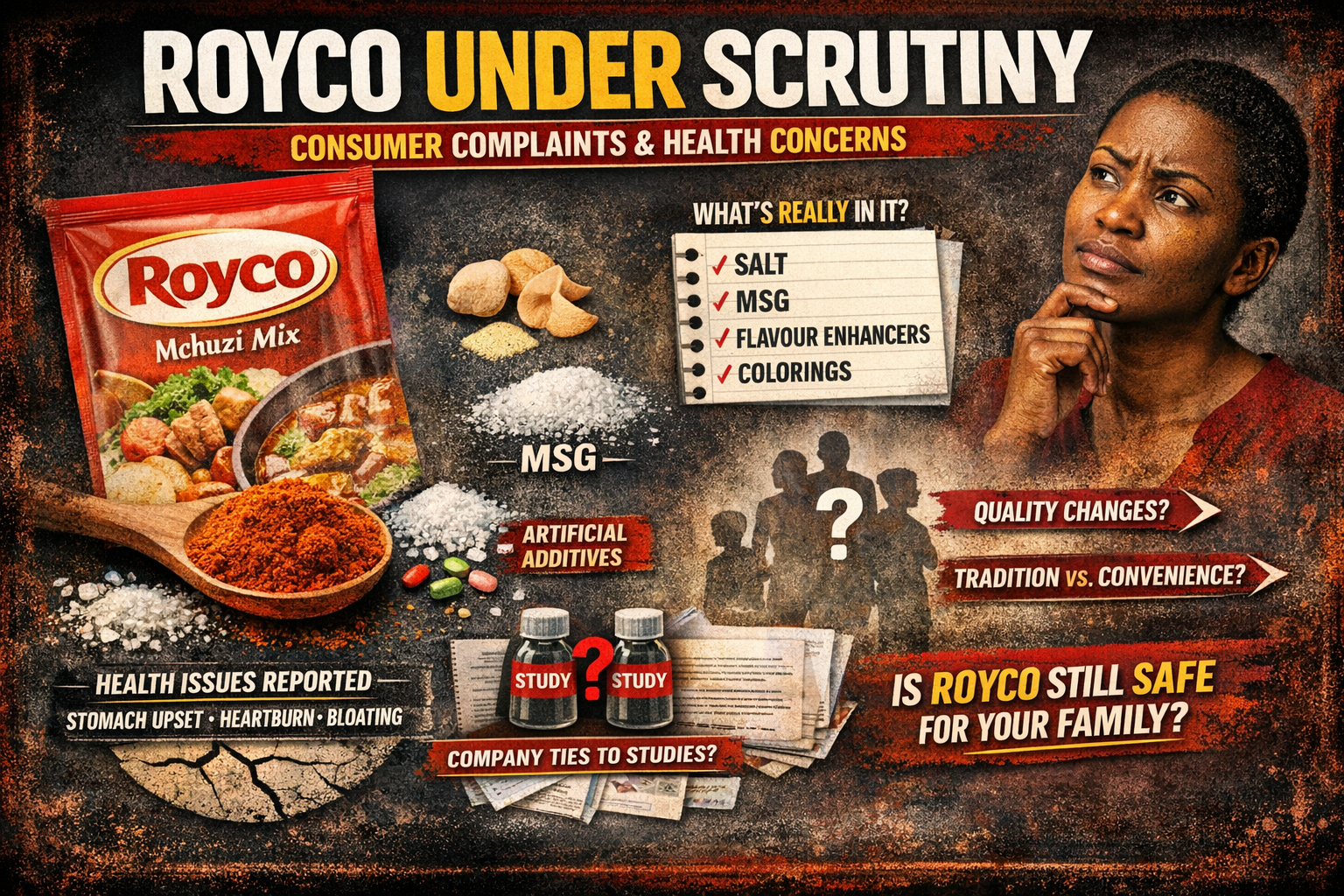
For years, Royco has held a firm place in Kenyan kitchens. It is used daily in homes, hotels, and food stalls to enhance taste and simplify cooking. But behind that popularity, a steady wave of complaints and concerns has been building among consumers, raising questions about what exactly is in the product and how safe it is for long-term use.
Many consumers have raised concerns about the health effects linked to frequent use of Royco. Some claim they experience stomach discomfort, bloating, or heartburn after meals prepared with it. These complaints are widely shared on social media and in everyday conversations, creating a perception problem that the brand has not fully shaken off. While there is no confirmed scientific link between Royco and serious illnesses, the persistence of these claims continues to fuel public suspicion.
A major issue at the center of the debate is the ingredient composition. Royco is marketed as a blend of spices and herbs, but its ingredient list reveals more than just natural components. It contains salt, flavor enhancers such as monosodium glutamate (MSG), and other additives designed to boost taste and extend shelf life. For many consumers, this raises concerns about over-reliance on processed enhancers rather than natural cooking ingredients.
The conversation becomes more intense when it comes to daily consumption. Royco is not used occasionally in most households. It is often used in nearly every meal. This level of consumption has led some health-conscious consumers to question whether long-term intake of such additives could have cumulative effects, even if each ingredient is individually approved for use.
There are also complaints about changes in quality over time. Some consumers argue that Royco does not taste the same as it did years ago. They claim the flavor has become weaker or more artificial, despite the product maintaining its strong color and aroma. This perception, whether accurate or not, has contributed to growing dissatisfaction among long-time users.
Attempts to address these concerns have not fully settled the debate. Some studies and statements from nutrition bodies have declared Royco safe for consumption and even highlighted the presence of beneficial spices. However, the involvement of the manufacturing company in some of these studies has led to questions about independence and credibility. For skeptical consumers, such assurances are not enough.
There is also a cultural shift at play. Traditional Kenyan cooking relied heavily on fresh ingredients, natural spices, and slow preparation methods. The rise of products like Royco reflects a move toward convenience and speed. While this suits modern lifestyles, critics argue it has changed how people cook, reducing reliance on natural flavors and increasing dependence on processed seasoning.
Despite all the criticism, Royco remains widely used. Its affordability, availability, and strong brand presence make it a default choice in many households. For many people, it is not just an option but a routine part of cooking. This widespread use continues even as concerns grow.
The situation presents a clear contradiction. A product that faces ongoing criticism continues to dominate the market. This raises an important question. Are consumers choosing Royco because they trust it, or because it has become too familiar to replace?
As awareness around food safety and healthy eating increases, consumers are becoming more cautious about what they use in their kitchens. They are reading labels more closely and questioning ingredients that were once ignored. This shift is slowly putting pressure on brands to be more transparent.
Royco now faces a critical moment. It must either address these concerns openly or risk losing trust over time. The brand still holds a strong position, but public perception is changing. And once doubt sets in, it can be difficult to reverse.
The debate around Royco is no longer just about taste. It is about health, trust, and transparency. And as more consumers begin to ask questions, the answers will determine whether the brand continues to lead or begins to lose ground.